RTX 5090: The Future of Gaming Graphics
Nvidia just ended the argument about what the most powerful consumer GPU ever built looks like. The RTX 5090 is official. And the numbers it carries into the market are not incremental improvements over what came before.
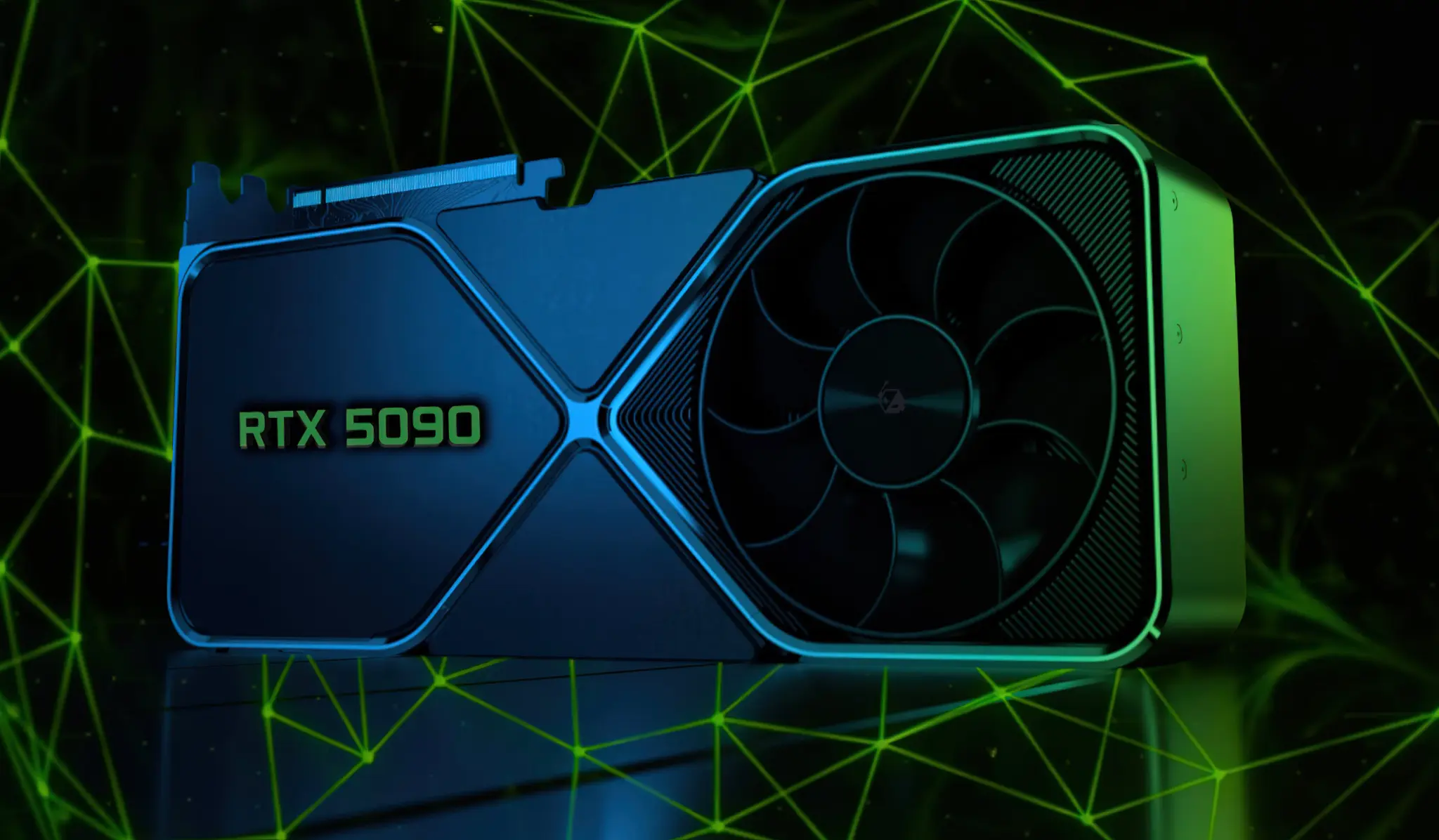
RTX 5090 Officially Announced: Next-Gen Gaming Beast Arrives
By TecBlitz | Hardware | 5 Min Read
Nvidia just ended the argument about what the most powerful consumer GPU ever built looks like.
The RTX 5090 is official. And the numbers it carries into the market are not incremental improvements over what came before. They are a generational statement delivered with the kind of confidence that only comes from a company that knows it has no meaningful competition at the top of the stack.
This is not a refresh. This is not a rebrand. This is Nvidia drawing a new ceiling for consumer graphics and daring the rest of the industry to reach it.
Here is everything that matters.
THE NUMBERS FIRST
The RTX 5090 launches on the Blackwell architecture. The same foundational design that powers Nvidia's data center dominance arrives in a consumer package for the first time and the specifications reflect exactly what that means.
92 billion transistors. 21,760 CUDA cores. 32 gigabytes of GDDR7 memory running across a 512-bit memory bus. 1,792 gigabytes per second of memory bandwidth. A total board power of 575 watts.
Every one of those numbers is a record for a consumer graphics card. Every single one.
The CUDA core count represents a 33 percent increase over the RTX 4090. The memory bandwidth improvement over the previous generation is 70 percent. The transistor count makes the RTX 4090 look like a mid-range product in the rearview mirror.
The price reflects all of it. $1,999 at launch. The same opening price as the RTX 4090 two years ago. For a card that Nvidia claims delivers twice the performance.
WHAT BLACKWELL ACTUALLY CHANGES
The Blackwell architecture is not just a node shrink of Nvidia's previous design. It introduces fundamental changes to how the GPU handles workloads that matter specifically to gaming in 2026.
The fifth generation Tensor Cores power DLSS 5. Multi Frame Generation — the technology that creates multiple AI generated frames between each rendered frame — is exclusive to Blackwell. The RTX 5090 can generate up to three frames for every one the GPU actually renders. At 4K. With visual quality that Nvidia claims is indistinguishable from native rendering.
The practical result in supported titles is frame rates that were impossible one generation ago. Cyberpunk 2077 at 4K ultra settings with full ray tracing running above 200 frames per second on a single consumer GPU. That sentence should not be possible. With DLSS 5 Multi Frame Generation on the RTX 5090 it is.
The fourth generation RT Cores handle ray tracing workloads with a performance improvement Nvidia puts at 2x over the previous generation. Path traced lighting — the rendering technique that calculates light behavior with physical accuracy rather than approximation — becomes viable at playable frame rates for the first time on consumer hardware.
Alan Wake 2. Cyberpunk 2077. Indiana Jones and the Great Circle. These are games built around path tracing as a first-class rendering mode. On previous generation hardware path tracing required significant DLSS assistance to reach playable performance. On the RTX 5090 it runs with headroom to spare.
DLSS 5 AND WHAT IT MEANS FOR EVERYTHING BELOW
The RTX 5090 is the flagship. Most people reading this will not buy one.
What matters almost as much as the 5090 itself is what Blackwell delivers at every price point below it. DLSS 5 Multi Frame Generation is exclusive to the entire RTX 50 series. Not just the 5090. Every Blackwell card from the 5070 upward brings the same generational AI upscaling advantage to its tier of the market.
A mid-range RTX 5070 running DLSS 5 with Multi Frame Generation delivers frame rates that the RTX 4080 cannot match at the same resolution. The performance hierarchy does not just shift at the top. It shifts across the entire stack simultaneously.
For anyone planning a GPU upgrade in 2026 this reality changes the calculation entirely. The RTX 40 series cards that currently occupy the used market are not competing with equivalent RTX 50 series products. They are competing with cards that have a generational AI advantage that no driver update will ever bring to them.
DLSS 5 is the upgrade cycle accelerant Nvidia has been building toward since DLSS 1.0 arrived in 2018. It arrived with Blackwell. It works exceptionally well. And it only runs on the new hardware.
THE MEMORY SITUATION
32 gigabytes of GDDR7 on the RTX 5090 is the number that ends a conversation the GPU community has been having since modern games started pushing past 16 gigabytes of VRAM in demanding scenes.
The RTX 4090 launched with 24 gigabytes. At the time that felt like more than enough headroom. Two years later games running path tracing at 4K with high resolution texture packs were beginning to approach that ceiling in specific scenarios. Not constantly. But visibly.
The RTX 5090's 32 gigabytes does not just clear that ceiling. It makes the ceiling irrelevant for the foreseeable future.
VRAM pressure is the silent performance killer that benchmark numbers do not always capture. A GPU with insufficient VRAM does not fail cleanly. It throttles. It stutters. It produces frame time inconsistencies that feel worse to play through than a lower average frame rate would.
32 gigabytes of GDDR7 on the RTX 5090 ensures that the card never encounters that problem with any current game and will not encounter it with games being developed for the next several years. At 4K. With textures fully loaded. With path tracing active. With nothing left on the floor.
That is what VRAM headroom actually means in practice and the RTX 5090 has more of it than any consumer card that has ever existed.
THE POWER QUESTION
575 watts of total board power is the number that generates the most legitimate criticism of the RTX 5090.
It requires a power supply of at least 1000 watts to operate correctly. Ideally more. A system built around the RTX 5090 with a high-end CPU, fast NVMe storage, and adequate cooling will pull close to 800 watts from the wall under full gaming load.
The 16-pin 12V-2x6 connector handles the power delivery. Early adopters of RTX 40 series cards encountered melting connector issues that Nvidia addressed through revised cable designs and firmware updates. The 12V-2x6 standard that replaced the original 12VHPWR connector is more robust. But the fundamental reality of managing 575 watts through a single connector demands that builders use the included cable, seat it completely, and ensure adequate airflow in their chassis.
This is not a card you drop into a budget build. It is not a card you pair with a 750 watt power supply you have owned for three years. The RTX 5090 demands infrastructure worthy of what it delivers and the power requirements are the most direct expression of that demand.
For the builders who meet those requirements the performance justifies everything. For everyone else the RTX 5070 and 5080 deliver Blackwell architecture at power envelopes that fit within normal high-end system builds.
WHO ACTUALLY BUYS THIS
The RTX 5090 at $1,999 is not a mass market product. It has never pretended to be. Neither was the RTX 4090. Neither was the RTX 3090.
The buyers are specific. Content creators rendering 8K footage who need GPU acceleration that does not make them wait. 3D artists running Blender and Unreal Engine workloads that saturate previous generation cards. Competitive professionals who want the absolute highest frame rates achievable at their resolution of choice. Enthusiasts who buy the best available because that is what they do.
For all of those buyers the RTX 5090 is the unambiguous answer to every question about GPU performance in 2026. There is nothing faster. There is nothing with more memory. There is nothing with better ray tracing performance. There is nothing that runs DLSS 5 more effectively.
The $1,999 price is what Nvidia charges for having built the only product that delivers all of those things simultaneously. It has always been that price for the flagship. It will probably always be that price for the flagship. The market for RTX 5090 units does not negotiate with the price. It either buys or it does not.
The people who buy will not regret it for the next three years.
THE BROADER PICTURE
The RTX 5090 announcement does something beyond establishing a new performance ceiling.
It signals where the entire RTX 50 series sits relative to the competition. AMD's RDNA 4 architecture with the RX 9000 series delivers excellent performance at mid-range price points. The RX 9070 XT competes aggressively with Nvidia's offerings below the 5080. AMD has built genuinely competitive products for the first time in years at the mainstream tier.
But AMD does not have an answer to the RTX 5090. Not in performance. Not in VRAM. Not in AI upscaling capability. Not in ray tracing throughput. The top of the stack belongs to Nvidia by a margin that RDNA 4 was never positioned to challenge.
The RTX 50 series launch also establishes the depreciation curve for the RTX 40 series used market more clearly than any previous announcement could. RTX 4090 cards that were trading above their original MSRP for most of their commercial life will find buyers more cautious now. The performance gap between a used RTX 4090 and a new RTX 5090 is significant. The DLSS 5 exclusivity gap is unbridgeable.
Nvidia has built the next generation. It is available now. The market will respond accordingly.
THE VERDICT
The RTX 5090 is the most powerful consumer graphics card ever built.
That statement is not qualified. It does not require footnotes. Every metric that matters to gaming performance — raw throughput, memory capacity, memory bandwidth, ray tracing performance, AI upscaling capability — the RTX 5090 leads them all by margins that will not be challenged until the RTX 6090 arrives.
At $1,999 it costs what the best always costs. At 575 watts it demands what the best always demands. It delivers what nothing else can deliver.
Next-gen gaming beast. The name fits.
Follow TecBlitz for weekly hardware reviews, GPU benchmarks, and the honest take on everything Nvidia, AMD, and Intel.
Also On TecBlitz:
- DLSS 5 - How It Actually Works
- RTX 4070 Ti - Worth It in 2026
- RX 7600 XT - Worth It in 2026
- $500 PC Build 2026
TecBlitz. No ads. No bias. Just tech.
More Articles
Interested in More Tech Insights?
Subscribe to our newsletter for the latest gaming reviews and tech news delivered to your inbox.